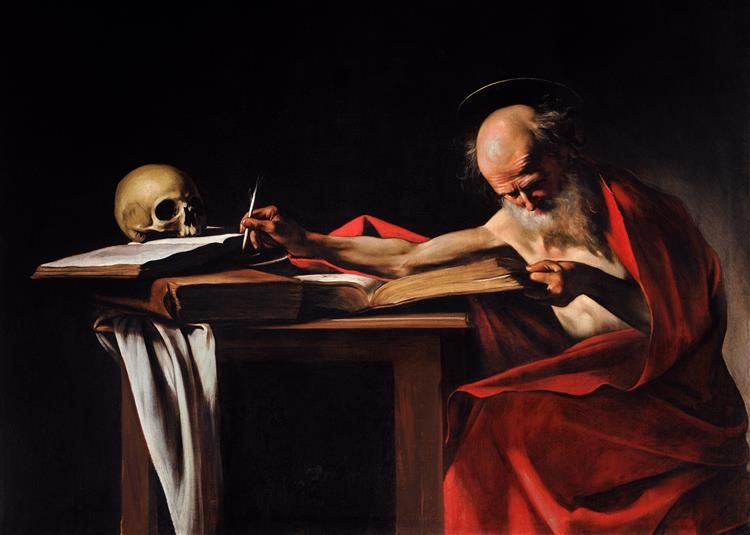
I’ve been doing a lot of thinking and talking lately about AI, writing, and education. I’ve gathered I’m a bit of an outlier on the subject. I know I’m not an evangelist or a luddite. I think I’m more of an ascetic, and it comes down to this:
I don’t want AI to make all writing easier.
I actually think it’s necessary that some writing remains hard or painful even. Sure, use AI for writing that skims the surface, or is just about oiling processes. You know: business, bureaucracy, and other brands of make-work. But creative writing or argumentative writing – the sort of writing that should be rooted in deep thought, belief, feeling, or all of the above – must be ours.
This type of writing should be lopped off of you. While you do it, if you’re doing it right, it should feel like a wrestling match with your mind. It activates the whole body and exhausts you. When it is really working, it stirs conflicting emotions. And, of course, it takes revision. It’s never done, just left.
Yes, sometimes it goes quickly. When it does, you ride it like a wave waiting for the crash. One moment the world is in perfect order and the next nothing makes sense. It’s the worst. I love it. At times.
The great strangeness of it, like any art, is that the better you get at it the harder it becomes. Everything you’ve ever written is a place and time you’ve been. You’ve since grown. You learn what you didn’t know. You look back with judgment and gratitude. You keep writing, and writing keeps getting harder, specifically.
Some see this as a horror story and AI as an escape. Others, writers I’d argue, see it as the way it has to be. Good writing is good suffering. It’s unnatural but intensely human.
As a writing teacher, I learned this was my job: getting students to find meaning in the struggle rather than look for a way out – only then could they write in their voices.
AI has a role in this struggle, sure, but not a creative one. Let it manage and analyze. Allow it to offer an insight or suggestion. Give it a strainer, and let it sift the stew of its own making. We can call what it’s doing generative, but not creative. That’s a place we need to preserve, as best we can, with every word.
Originally published on LinkedIn on August 6, 2024.