A Billion Regrets
Toss a rock at the internet and you’ll likely hit a headline on “tech addiction,” a craze largely fueled by the guilt and regret of Silicon Valley investors, entrepreneurs, and employees. While each take has a slightly different spin, the common thread is that the big tech companies – Apple, Google, and Facebook – have businesses and products designed to form habits and manipulate attention at a never-before-seen scale.

It’s nice to see a discussion among tech’s elite centering ethics, but I don’t think they’re getting it quite right. And frankly how can we expect the people who profited off these technologies to adeptly lead the charge to regulate them let alone understand them ethically? While I welcome the discussion, the fact it’s coming so late proves the point many of us have known all along: Silicon Valley, for the most part, has ignored humanities concerns at its peril. When founders and CEOs have come around and acknowledged the need for more people with humanities expertise, it’s more often than not about building more satisfying (one might even say compelling) products. Take George Anders’ explanation for the role humanities types can fill at Slack: “The more that audacious coders dream of changing the world, the more they need to fill their companies with social alchemists who can connect with customers–and make progress seem pleasant.”
How can we expect the people who profited off these technologies to adeptly lead the charge to regulate them let alone understand them ethically?
Writing stuff, empathizing, connecting with customers, and so on are things humanities people can do, but that’s still a limiting frame. These are the kinds of things engineers imagine humanities work is and that fit well into corporate work. But as anyone with a love of the humanities knows, what the humanities really offers tech is challenging questions and context. And it’s this missing historical, cultural, and social context that’s preventing the tech addiction discussion from drawing deep insight.
But as anyone with a love of the humanities knows, what the humanities really offers tech is challenging questions and context.
When Old Arguments Were New
Design and media ethics, as well as the impact of technology on human beings, are a fundamental aspect of media studies and media history. What’s being treated as disruptive, innovative ideas by Silicon Valley – that software design has ethical implications and that there’s this thing called the attention economy – have been long-running, central concerns among media scholars. And, not surprisingly, there’s a lot to learn from them. Instead of seeking this work out or giving it a platform, the tech industry is following its typical a-historic, and hubristic playbook. Bombastic statements about media effects (rarely grounded in history or research) are being used to whip up what’s looking like a moral panic to fuel press coverage.
Listen, I know this sounds salty, and it is. I’m a media scholar (well former, I guess), after all. But beyond that, this is more about the missed opportunity to have some more substantive conversations that actually help us understand this point in time – and how significant smartphones and social media are – in terms of media impact. But as a consequence of hyperbole, we’re missing out on this nuance. In place of these conversations, which could be grounded in decades of research, we’re in danger of recycling past discourses about media’s corruptive influence which has accompanied every mass media from writing to TVs to comic books.
If there’s one thing media history can teach us it’s that all technologies were new, special, and frightening.
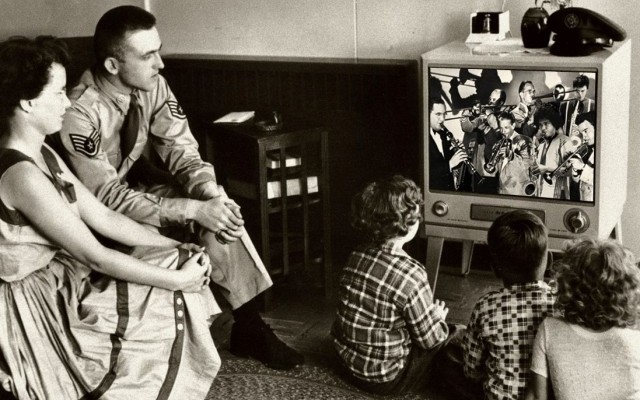
This isn’t to say I disagree, for instance, with Tristan Harris’ claim that there’s something particularly special about the way Big Tech manipulates the attention of so many people, so often. There’s certainly something there worth investigating. But before we rush to condemnation or regulation, perhaps we should first seek to acknowledge and understand that one could’ve said the same of broadcast TV in the 1950s-60s. If there’s one thing media history can teach us it’s that, as the brilliant Carolyn Marvin puts it, all technologies were once new. And what’s new can be scary, especially to those above the age of 35. In short, as weird as now seems, it’s been just as weird before.
To Be Human
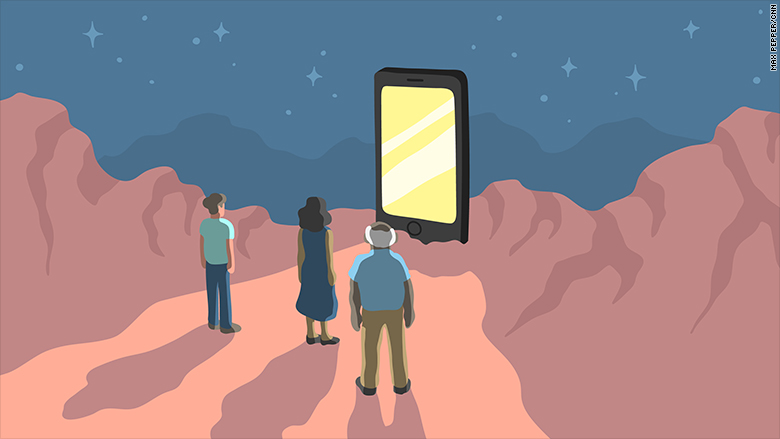
So what can we learn from our past selves? I’d contend that the thing people are struggling against (beyond, ya know, that whole insatiable, clever, and unethical thing called capital) is that what it means to be human is to be technological. For many, that’s an uncomfortable notion.
I’m not here to prove that point; others have done so more eloquently.
If we accept the idea that what makes one human is the relationships we form with things and other beings, then there’s a serious feeling of alienation that can occur when the things that define others feel foreign to oneself. Since these things form our sense of self, this alienation feels akin to the entire species diverging. We see the young – perhaps our children – undermining what we knew culture, behavior, gesture, and beyond to be. We struggle against these new definitions of humanity by policing them. We anxiously pathologize new human behavior and relationships, calling them inappropriate or addictive. The battle is never won. People and things die. Culture changes. So do we. Shoes change our gaits; typewriters alter our writing as it did Nietzsche’s. Technology is iterative and its effects are as well.
https://www.youtube.com/watch?v=EszwYNvvCjQ
However, measured examinations of these iterative nudges and their impacts don’t make headlines, or money in the age of the infinitely scrollable attention economy. That’s the irony of the Silicon Valley-driven narrative of tech addiction: it’s taken on the tone and tenor of moral panic to break through the very noise it’s meant to critique. Well, if there’s anyone who knows how to manipulate the attention economy it’s the people who manufactured it.
Measured examinations of these iterative nudges and their impacts don’t make headlines, or money in the age of the infinitely scrollable attention economy.
Think of the Children
Now don’t get me wrong: just because I think technology is what makes us human doesn’t mean I think we shouldn’t approach technology ethically and responsibly. While I might be suspicious of Silicon Valley-guided discussion, I do think we need to critique and understand each and every technological and cultural moment. This is particularly important given some of the research about social media’s impact on mental health and self-image.
So how do we help young people without succumbing to a panicked and punitive frame of mind? First, we need to try and approach things more generously that we’d normally have knee-jerk reactions to (especially those things kids are doing). We need to listen to kids and try and understand them free of judgment. Second, I think we all need to be better at reflecting on how we’re using technology and how it’s affecting us and those around us. Third, consider setting up some boundaries. If you’re a parent, danah boyd outlines a couple simple, familial strategies: verbalizing one’s own phone use and setting up family-wide agreements about phone use. In terms of schools, we need to adopt and teach media literacy and digital citizenship curriculum. Students need to habitualize a way of thinking about and reflecting on how their devices and their use of social media does or doesn’t provide value to them. We need to help young people see how technology shapes culture, who profits from it, and how they can exercise their agency. It’s these foundational reflective skills that’ll translate to whatever tech emerges next. The same tech that’ll make a new generation of entrepreneurs rich and regretful, the latter feeling always coming a bit too late.
Postscript
Imagine what it’d be like to have been born before and then live through the spread of electric lighting and telecommunication, then consider how extraordinary the technology of now is.
https://www.youtube.com/watch?v=1cGEe2makeM&feature=youtu.be&t=3m