Persona Creation Kit
- Organization
- WestEd
- Role
- Research, content design
- Period
- August 2024–April 2025
Overview
The Persona Creation Kit grew out of a research project funded by the Gates Foundation that I co-led at WestEd with Ann Edwards. We studied the experiences of faculty and students in gateway college math courses. Our goal was to help courseware designers create more useful products that meet the evolving needs of modern students and faculty.
This page focuses just on the Persona Creation Kit: a new method I conceptualized and co-designed (along with Melissa Malguy-Salamanca) for building and rebuilding personas from our research findings. This kit was developed alongside journey maps, ecosystem maps, and overall recommendations for courseware design.
Problem
Students and faculty brought very different circumstances to their math courses: competing responsibilities, limited resources, gaps in technology skills, and varying access to support. Courseware helped with practice and grading, but participants also needed connection, meaningful feedback, and opportunities to understand why the math mattered.
For the kit, the design challenge was to make that variety useful to product teams. We needed a way for designers to explore how people’s motivations, resources, and circumstances interact, while keeping those conversations grounded in the research.
Solution
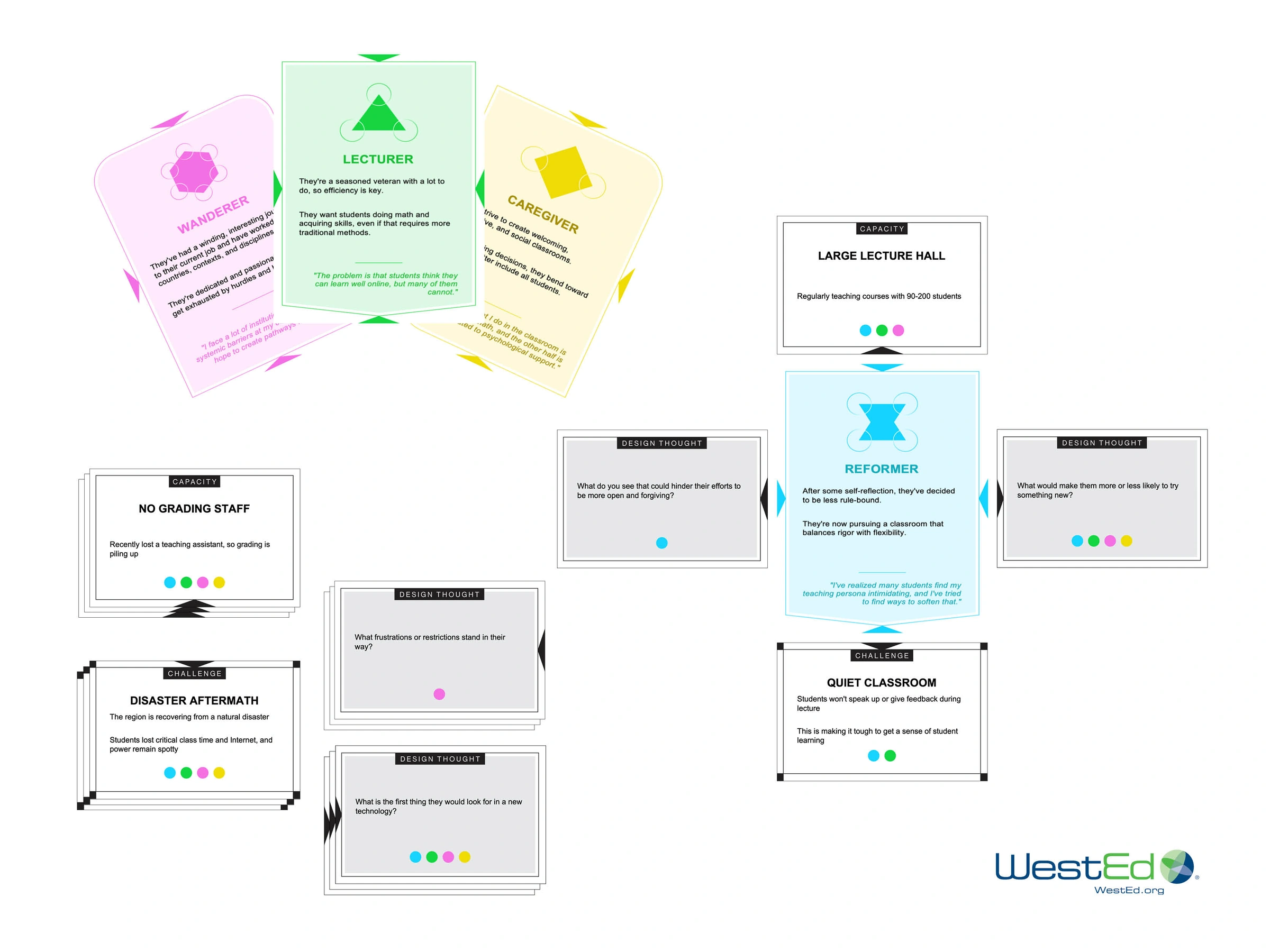
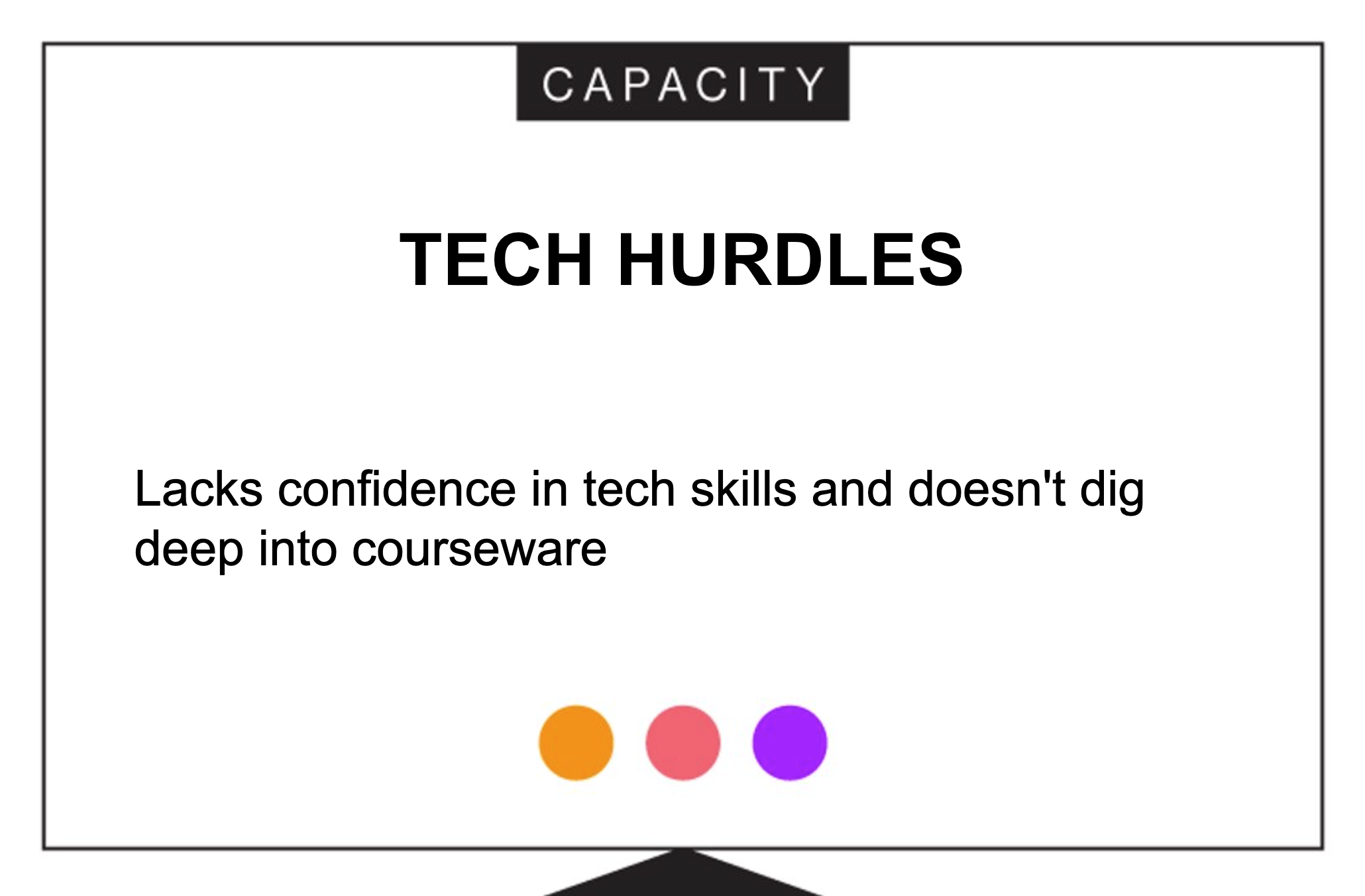
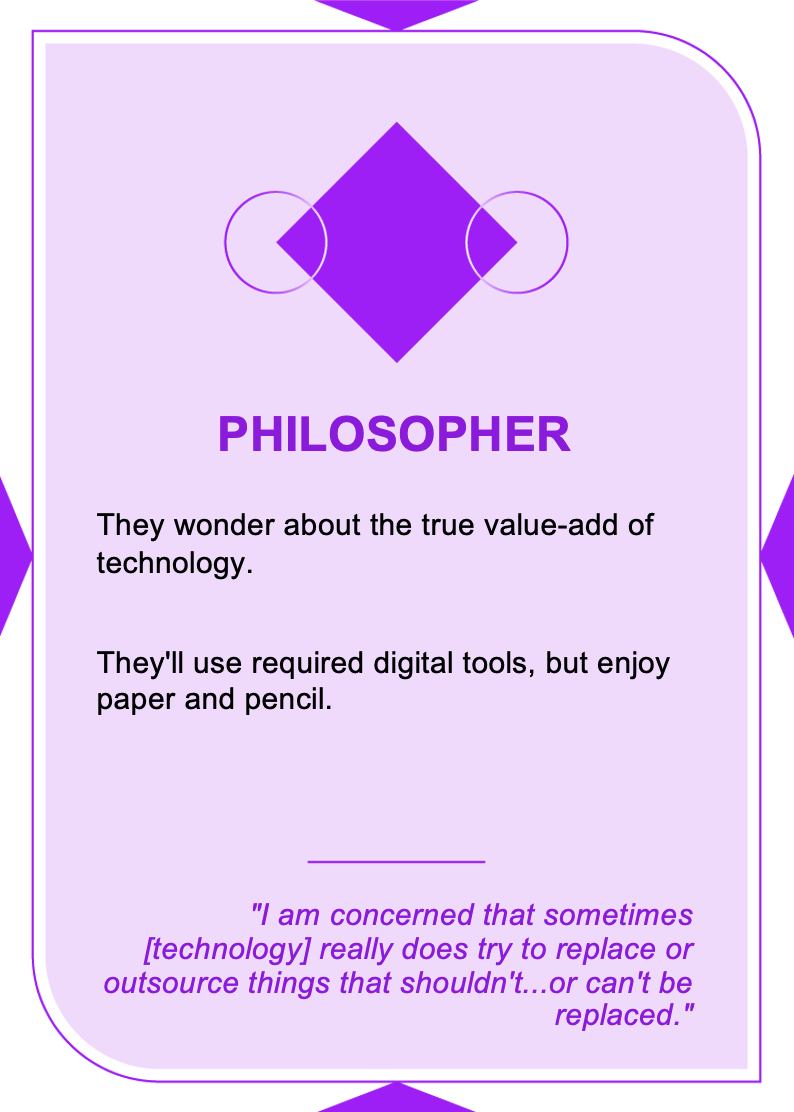
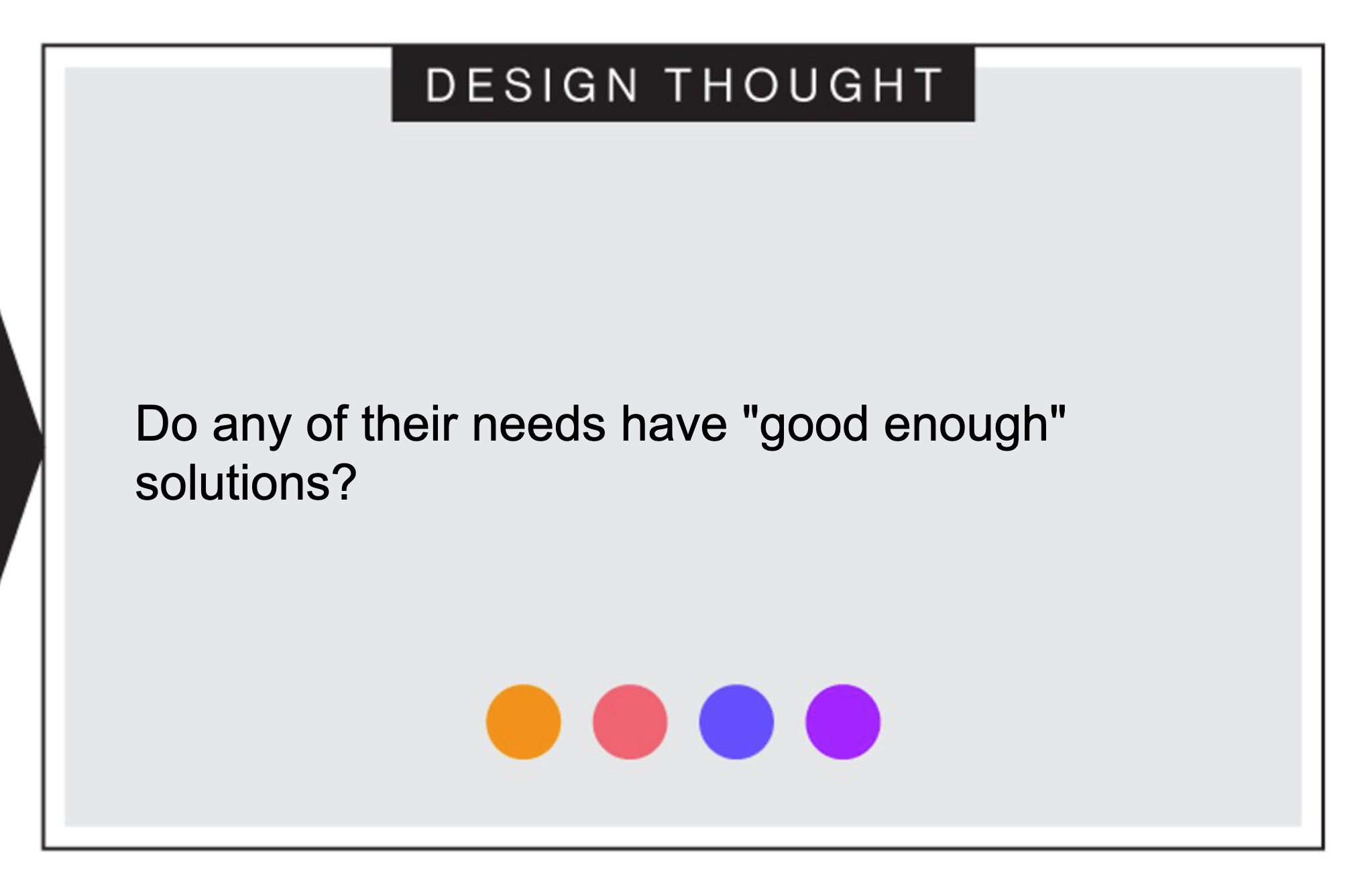
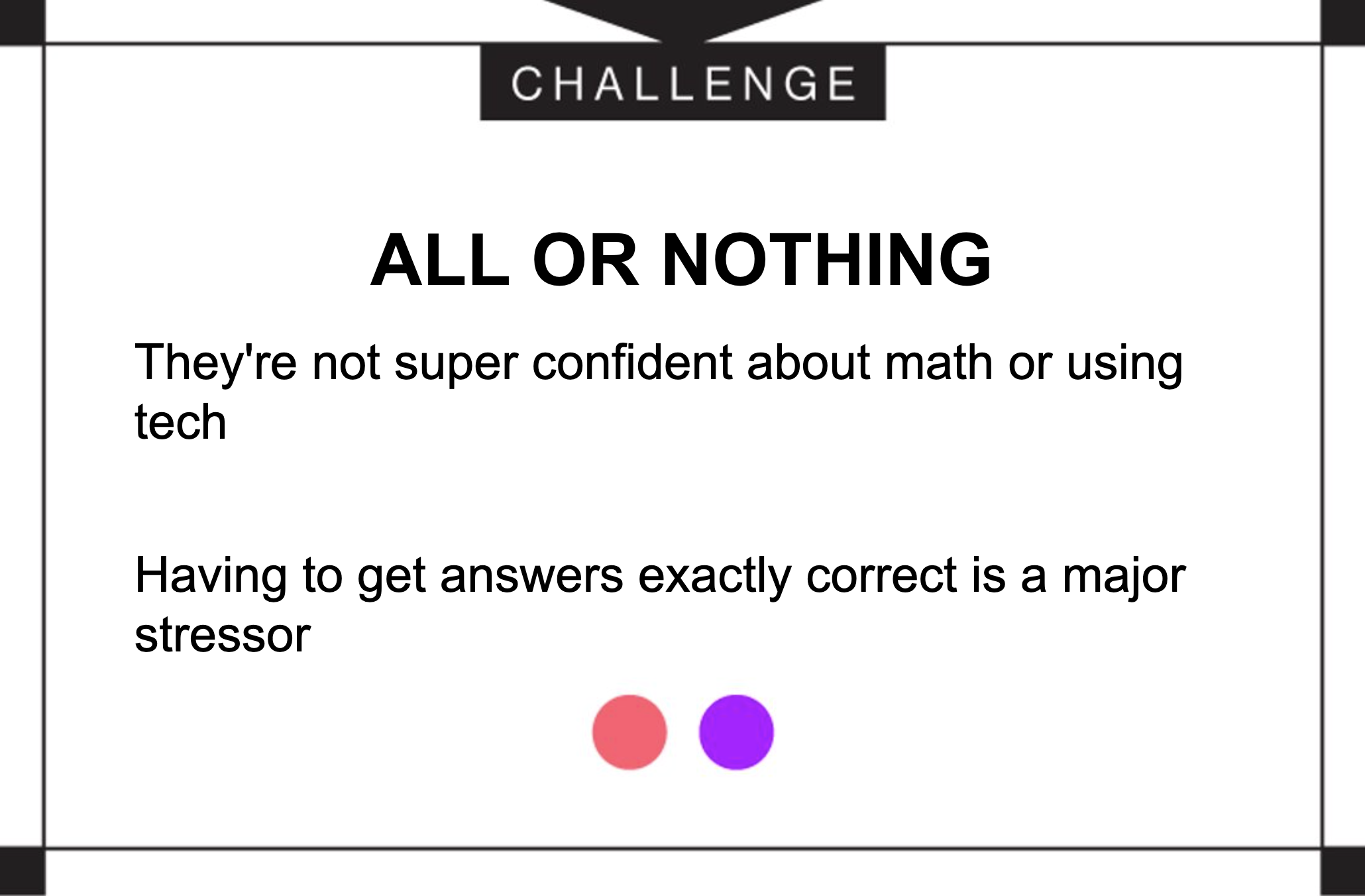
Based on our data analysis, the kit focused on eight archetypes: four students and four faculty members. Each archetype describes core motivations and includes a participant quote. To build a persona, the user of the kit (such as a product designer or developer) then adds a capacity card describing this person’s available resources and abilities. Finally, to complete the persona, they then add a challenge card that describes the circumstances affecting the person’s learning or teaching.
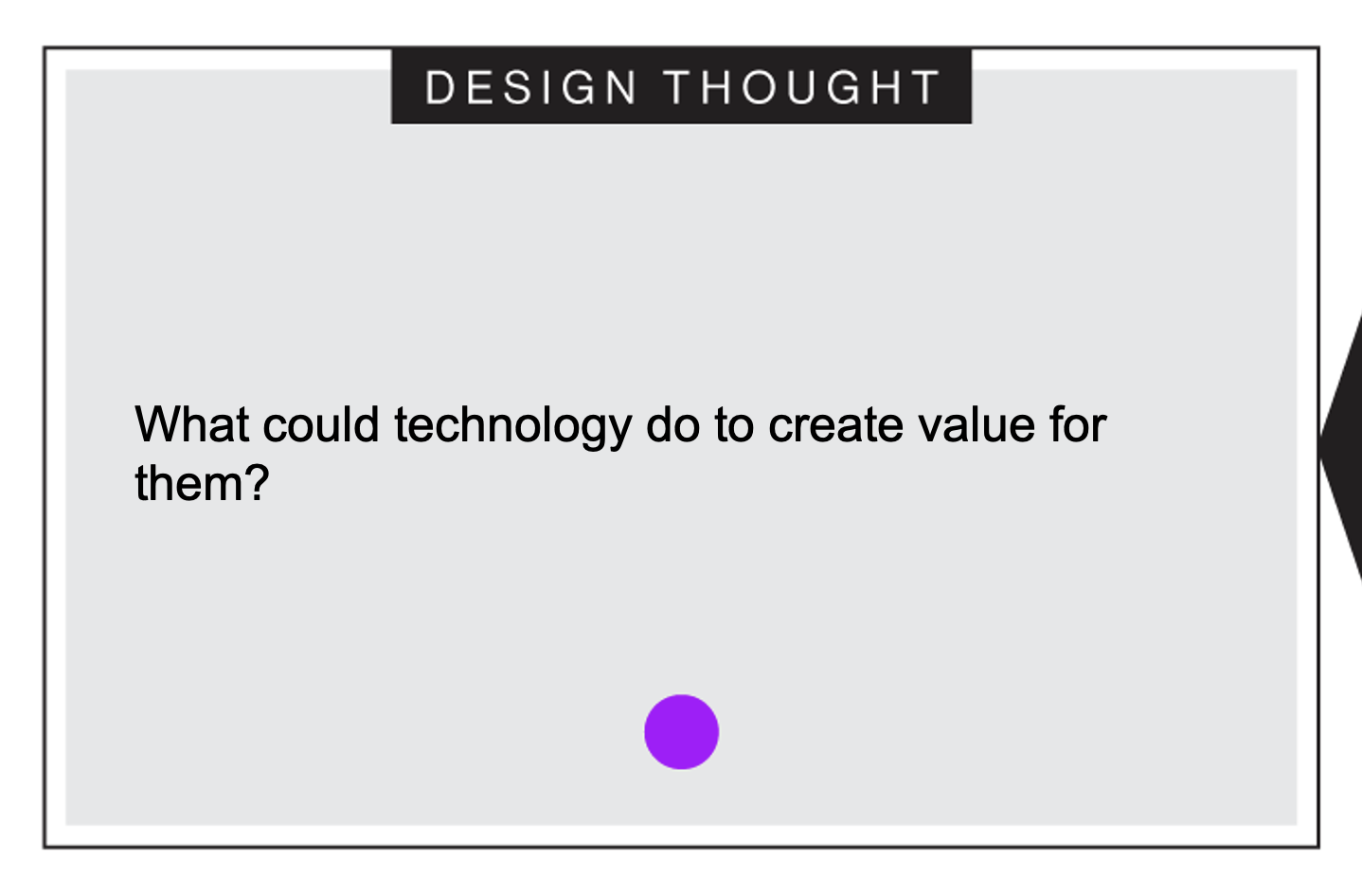
Color coding on the cards indicates which cards match together. Two optional design thought cards provide questions that invite reflection and discussion. Every card draws on real participant data, allowing teams to create many different personas and explore the implications for a product’s design.
Methods
The study included 76 faculty members and 50 students from 69 colleges and universities across 30 states. Participants taught or studied College Algebra, Quantitative Reasoning, and Calculus I in a range of course formats.
We conducted hour-long interviews, followed by surveys about technology needs. Nine faculty members also completed a six-entry diary study documenting their experiences with courseware over a semester. Initial theme creation was done through a rainbow chart of post-interview summaries and then team-wide collaborative sorts. Later, all data was coded and analyzed using MAXQDA or descriptive analysis.
Results
The work helped inform the design of Learnvia, AI-enabled courseware developed through a collaboration between Carnegie Mellon University and the Gates Foundation. Learnvia is backed by a $55 million investment from the Gates Foundation.
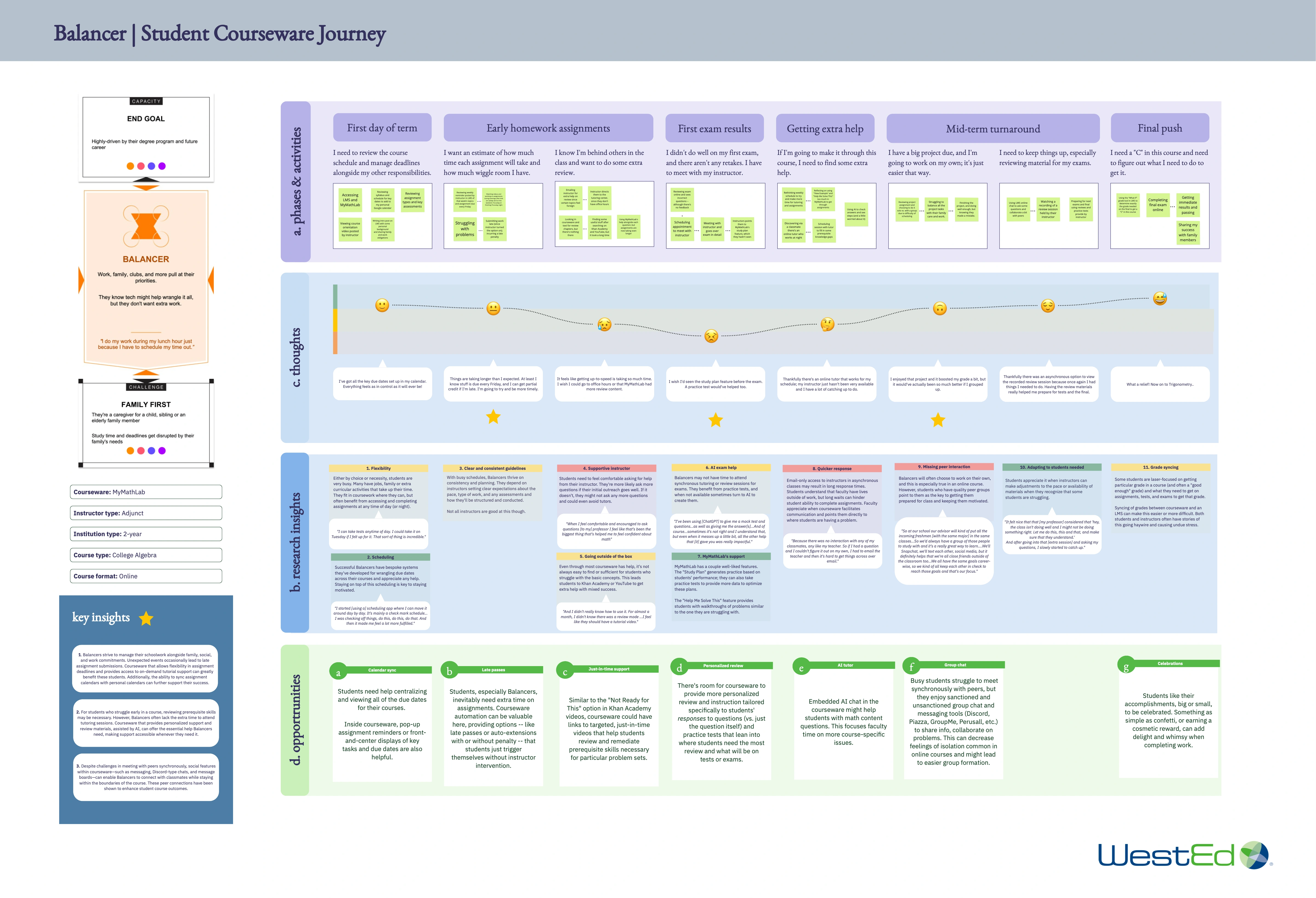
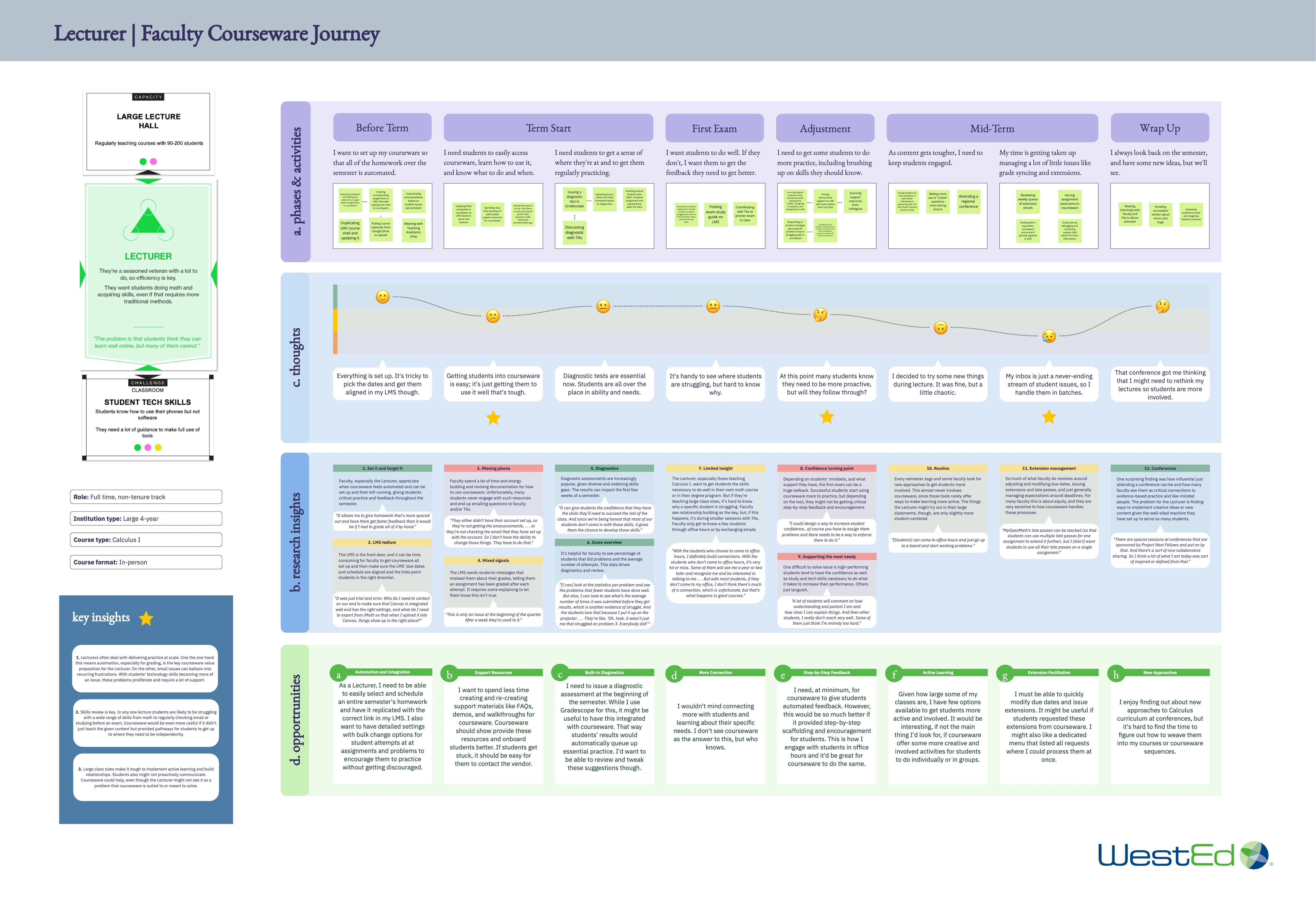
The assembled personas also anchored student and faculty journey maps which surfaced detailed user experiences with existing courseware and highlighted opportunities for new solutions.
1 of 2