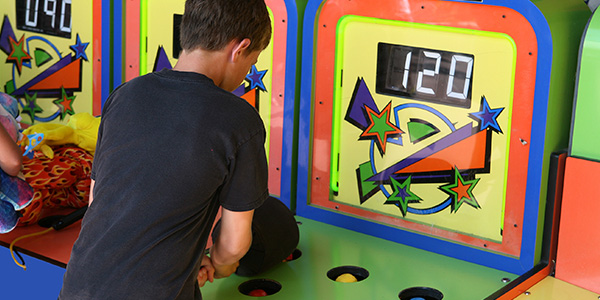
In this article from KQED, I share some thoughts about how/why to pursue game-based learning vs. gamification. The premise is that teachers are growing tired of gamification – and for good reason. They know, as students do, that gamification is a tiresome performance of fun. The tingle of a Dorito. A bedazzled Skinner box.
Sure, gamification is useful for generating data toward some end that might be framed as “assessment,” but it’s not good, nutritious learning that leads to what teachers actually want: absorbed, curious, joyful students exploring the workings of the world.
That doesn’t require badges, points, bells or whistles: it requires playfulness and possibility. It requires agency and the unpredictable.
If gamification is playing whack-a-mole then play is chasing a butterfly. Game-based learning is a way of structuring that chase so it invites some conclusion.
The good news is teachers are already great at this; the bad news is they have to be given the opportunity. And there’s not much of that going around lately.
This is why I think the future of educational games isn’t necessarily more educational games (at least not until teachers have more time and agency themselves). It might just be more education about games, play, and gamefulness – and how to lean into and take advantage of mundane, playful opportunities and emergent happenings that sprout in every corner of a classroom every day.
Originally published on LinkedIn on February 17, 2025.